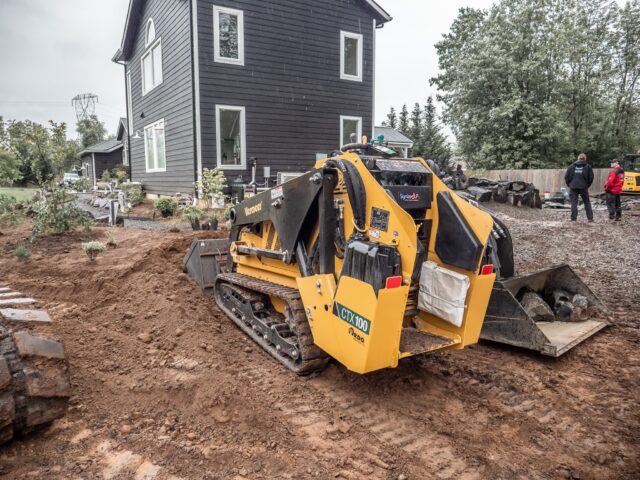
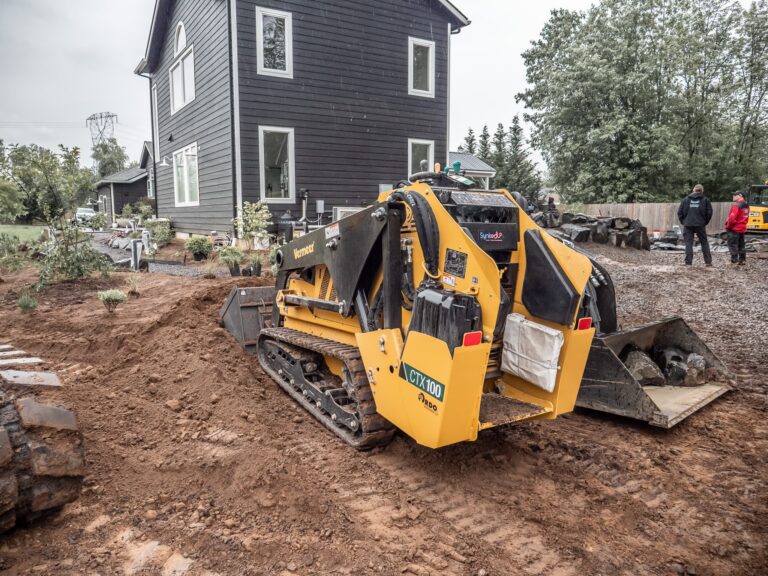

Every landscaping owner has found professional landscaping tools and equipment that might benefit their business, looked at the price tag…and hesitated. Turns out the professional-grade trimmer costs three times as much as the one next to it. It’s hard to go against the logic of just settling on the cheaper option, especially when margins are tight and you’ve got five other line items you need to worry about.
That instinct isn’t wrong, exactly. It’s just incomplete.
The real question isn’t whether or not spending money on professional landscaping tools and equipment is “worth it” or not. It’s about knowing when the math tips in your favor, and when it doesn’t. For instance, you can buy a 50lb bag of mulch, or 1 yard of bulk mulch. The price tag of the 50lb bag is much cheaper, yes. But the value is much worse. You’re much better off buying the 1 yard of bulk mulch than 20 50lb bags to get a yard.
Today we’re here to look at both sides honestly. There are some situations where budget equipment will work just fine. Spending more money than you need to isn’t a virtue. But there are other situations where cheaper equipment will quietly drain your margins, grind down your crew, and chip away at your business’s reputation one inconsistent result at a time.
The goal is to have the right framework for making that call, so the next time you’re deliberating in front of a price tag, you’re working with the full picture.
Where Budget Tools Still Make Sense
Sometimes, replacing your old budget tools with expensive professional landscaping tools and equipment is genuinely not worth the cost.
The clearest case for sticking with budget equipment is low-frequency tasks. These are the tools you reach for maybe a handful of times a season. A specialty edging tool used on a handful high-end residential accounts every year doesn’t need to be the $6,000 model when the $1,200 option works just fine. The math won’t change because one of the tools has a fancier brand name on it.
The same logic applies when you’re testing out a new service. Maybe you’ve started doing small irrigation installs, mostly to see whether or not there’s demand in your market. Shelling out for professional-grade equipment before you even know if your business will continue to offer that service in the future is getting way ahead of yourself. Start with what gets the job done. Upgrade when the volume justifies it.
Businesses still in the early stages also face a version of this. When your cash flow is tight, you should concentrate your equipment spend on the tools you use for your highest-volume, highest-margin work. And everywhere else? You’ll have to make do for the time being. That’s prioritization, not a failure of ambition.

The key is knowing why you’re choosing the budget option, and having a clear sense of what it would take you to upgrade to newer or more professional landscaping tools and equipment. Remember: A budget tool doing a perfectly fine job is just a tool. It only becomes a problem when it stops being part of the solution.
Where Cheap Tools Cost More Than They Save
The problem with cheaper (or older) equipment isn’t that it breaks down. We all do, eventually. It’s what happens when those tools break down.
Maybe you have a tool failure mid-job. On a single-day maintenance stop, that’s an inconvenience. On a multi-day or multi-week install, it’s a much bigger problem. A breakdown doesn’t just cause delays that day — it can stall an entire project. Your crew shows up the next day with nothing to do. Materials you ordered are sitting on-site. The timeline you promised the client starts to slip. When that happens your next job in the queue gets pushed back, too. And the one after that.
Let’s take a look at the math on a single breakdown. You’re three days into a $22,000 install when your steer skid goes down. Two crew members sit idle for four hours. That’s eight billable hours at $100/hour that you’re eating while you track down a rental that’ll run you $450 for the day. That’s over $850 in a single incident, even before you account for the schedule ripple that follows.
Job delays compound the same way. A mower that takes 65 minutes on a property that a better machine could handle doesn’t sound like much – until you multiply it across a full client list over a full season. Those extra minutes add up to hours you paid for but couldn’t bill to anyone.
How Professional-Grade Equipment Changes the Economics
Then there’s the flip side of the breakdown math. There’s what good, professional landscaping tools and equipment actually buy you (hint: it’s more than just reliability!)
Lower Cost of Ownership Over Time
The sticker price on professional-grade equipment is certainly higher. But the sticker price is also a one-time number. Where the real comparison happens is on what you spend keeping that equipment running over the next five to seven years.
Old or budget tools wear out faster, need more frequent repairs, and can be harder to find parts for when something does go wrong. Professional landscaping tools and equipment , on the other hand, are built with better components, more available parts, and better design lead to lower maintenance costs, and a longer life.

A professional mower that runs reliably for eight years and costs you $12,000 is often a better investment than a $6,000 machine that you have to repair constantly and then replace in four. When you run that math, the cheaper option frequently ends up being the more expensive one.
Speed and Throughput
Professional landscaping tools and equipment are engineered specifically for sustained, high-volume use. Spoken plainly, they do more, faster. For example, upgrading from a mid-grade 48-inch walk-behind to a professional 60-inch zero-turn could reduce your mowing time on a one-acre property from 55 to 35 minutes, or a 36% reduction in time spent on that job.
If your crew runs 5 mowing accounts a day, that’s 100 minutes saved per day, or nearly 3 additional accounts you can complete in the same workday. Over a 30-week mowing season, that’s potentially 400 additional account visits, revenue that would be completely unattainable with a slower machine.
Consistency and Quality
Here’s another old cliche: you get what you pay for. Sometimes, it’s even true. Professional landscaping tools and equipment produce consistent, repeatable results. You’ll get the same quality on job 50 that you got on job 1.
A commercial-grade walk-behind spreader lays down fertilizer or seed at a precise, even rate across the whole job. A worn or budget model clogs, skips, and streaks, and you often don’t see the results until two weeks later when the lawn comes in patchy and the client is calling to ask what went wrong.
Consistency also simplifies crew training. When your tools behave predictably, a new hire can get up to speed in days, not weeks, because they don’t have to learn how to compensate for equipment quirks.
Expanding Scope
Certain jobs can’t be done well – or at all – without the right professional landscaping tools and equipment. Better equipment expands on what you can bid on. If your business is passing on larger or more complex work because you don’t have the right tools for the job, that’s an opportunity cost with a real dollar value.
Signs It’s Time to Upgrade
Time to switch your budget equipment to professional landscaping tools and equipment? Be on the lookout for these signs.
You’re Scheduling Around Your Equipment’s Limitations
If your crew avoids certain tasks, or you mentally route jobs around what you know your tools can or can’t handle, that’s a big red flag. That uncertainty is already costing you, in planning time, in stress, and eventually in the job itself, where something goes sideways at the wrong moment.
Job Completion Times Are Creeping Up
If the same jobs are taking longer than they used to, and your crew experience hasn’t changed, it’s time to take a look at your equipment. A 15-20% increase in time-on-site for a certain service, example, is a pretty meaningful sign.
The Math on Your Rental Equipment Isn’t Adding Up
If you regularly rent equipment to fill gaps your current tools can’t cover, run that number. Rental fees add up fast. In a lot of cases, you’ll find you’re actually spending more annually on rentals than you would on a monthly payment if you just bought it outright. And at the end of all those rentals, you still won’t own anything.
Callbacks and Quality Complaints
One callback or complaint on a job can happen for any number of reasons. A pattern of callbacks on the same service or type of work points to a process or a piece of equipment with a problem worth diagnosing.
Your Crew Says So
Listen to your crew! Experienced workers know when improper tools are holding them back. If someone on your team raises a concern, take it seriously.
Evaluate an Investment Before You Make It
The right mindset for any big equipment decision isn’t about price, it’s about cost. The price is what you pay for professional landscaping tools and equipment once, and the cost is what you pay continuously for not having those tools. All the times that older, slower tool breaks down, or delays jobs? That’s part of the cost, too.

This is why you should know your numbers before you pull the trigger on upgrading your tools. How many labor hours per week does this problem currently consume? How much does that cost? How many additional jobs per season could be possible if you upgraded to newer or better professional landscaping tools and equipment? What does one breakdown, one callback, or one rejected bid actually cost? Once you put numbers to those questions, the decision gets easier to make.
Do a rough payback calculation by taking the monthly value the equipment generates and then dividing the equipment cost by that number. A $6,000 piece of equipment that saves you $500 a month in labor and lost jobs will pay for itself in a year. When the math is done honestly, most sound equipment investments pay back within a season or two.
If financing is part of the conversation, compare the monthly payment for that equipment against the monthly value generated. A $15,000 equipment purchase financed over 48 months at 7%, for example, runs approximately $360 a month. If the equipment saves you $500 a month in labor, or allows for $1,500 a month in additional revenue, then your cash flow case is clear. Just make sure that the value generation is quantifiable and real. Run your numbers before you sign the paperwork, not after.
Work Smarter, Not Harder
Hesitating at a price tag is understandable, but it’s only half the picture.

Landscaping companies that grow and last aren’t the ones that always buy the best professional landscaping tools and equipment, or the ones that always buy the cheapest. They’re the ones that make deliberate decisions based on real numbers.
If you’re not sure where to start, the answer is usually already there in your business. Look for the slow jobs, the repeat callbacks, the work you have to say no to, the equipment that your crew complains about the most. Pick one, run the numbers honestly, and start there.
And if you need help knowing your numbers?
Book a demo today, and we’ll show you how SynkedUP can help you calculate the true cost of the more expensive equipment against the true cost of cheaper options (and the hidden costs that come with them).


